
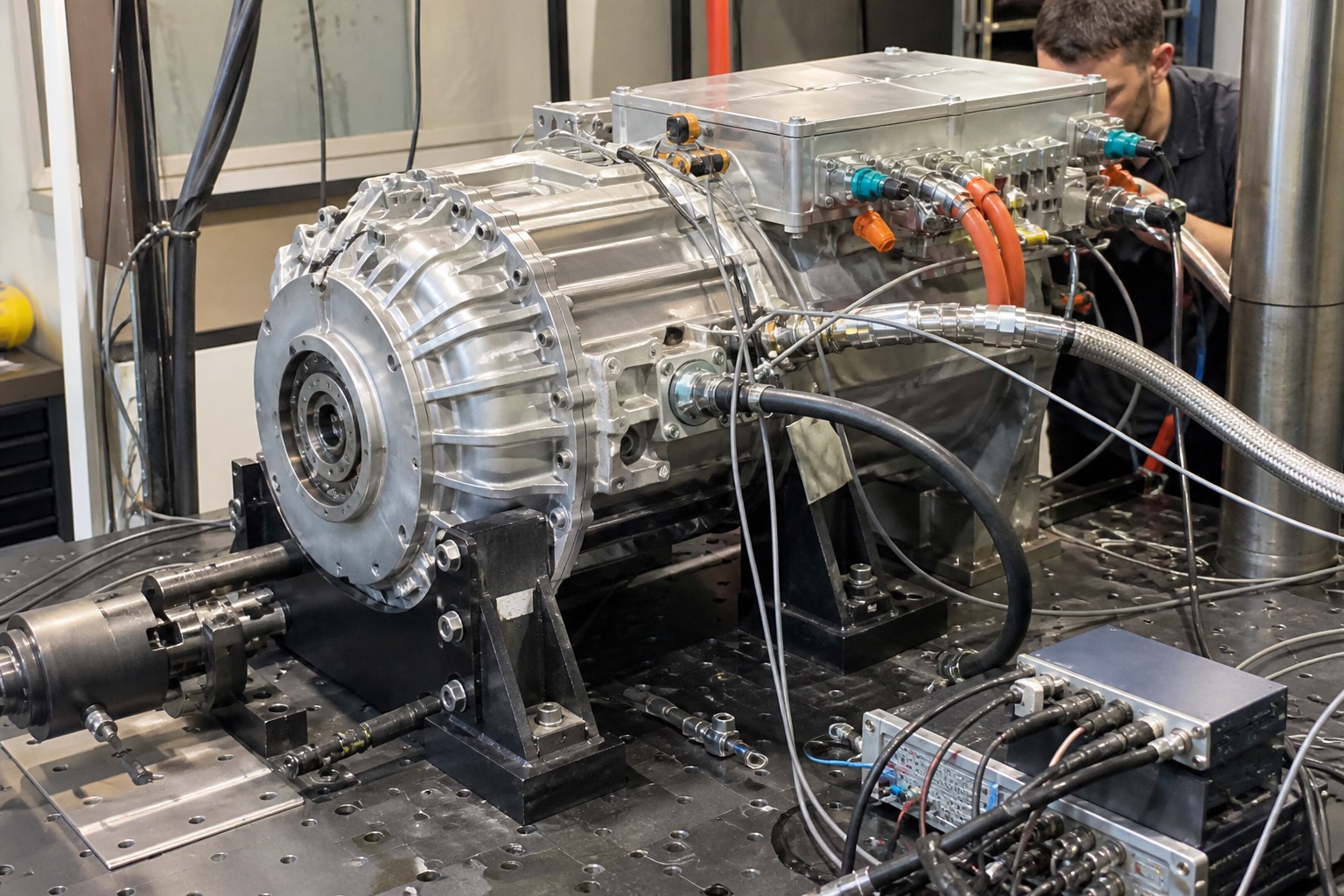
Peak power is only the opening measurement. Flight-ready electric propulsion has to deliver repeatable thrust through vibration, thermal cycling, rapid power changes and faults that cannot be rehearsed for the first time in the air.
Bench numbers are the beginning
A motor can look exceptional at one operating point and still struggle across a real mission. Temperature, mounting loads, switching behaviour and cooling performance have to be measured together.
The useful result is not the highest number. It is the performance the aircraft can rely on repeatedly.
Design the failure paths
Sensors, isolation, cooling loops and control software need clear behaviour when a component moves outside its normal range.
A fault should be detected early, contained deliberately and communicated as usable remaining capability.
Evidence compounds
Each test should strengthen the next design decision and create evidence that can follow the propulsion architecture toward certification.
That means controlled configurations, traceable results and hardware tested in conditions that reflect the aircraft.
Flight confidence is built on the ground, one controlled test at a time.